
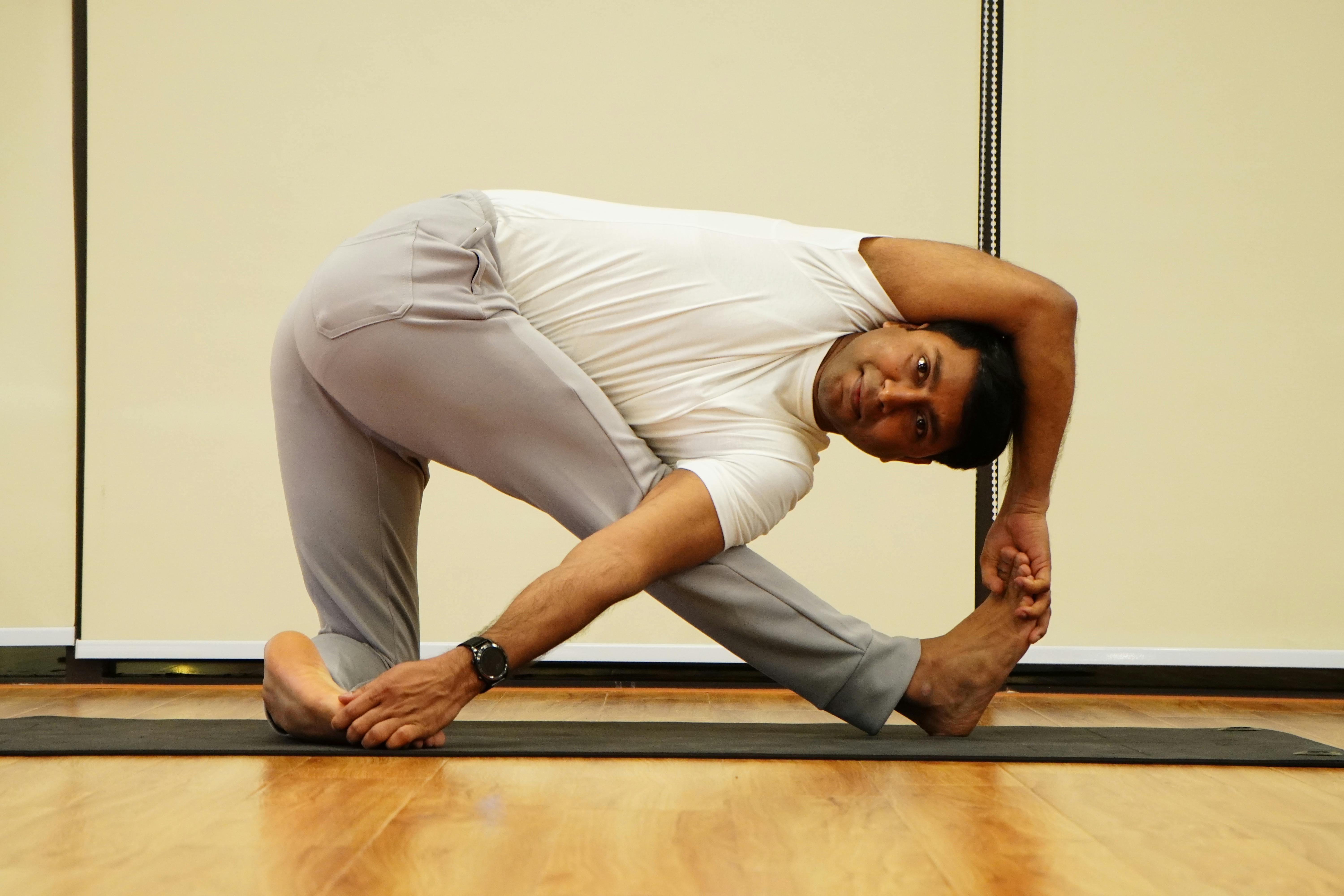
Discover the groundbreaking world of AI-powered personalized yoga and biofeedback in 2026. Learn how smart mats, wearable tech, and intelligent algorithms are transforming traditional yoga, offering unparalleled customization, real-time pose correction, and enhanced mental wellness benefits. Compare the leading platforms and gear to find your perfect practice.
Introduction to the Topic
Welcome to 2026, where the ancient practice of yoga is meeting the cutting edge of artificial intelligence and biofeedback technology. For centuries, yoga has offered a path to physical strength, mental clarity, and spiritual well-being. Yet, the challenge for many has been finding a practice truly tailored to their unique body, individual goals, and evolving needs. Generic studio classes or one-size-fits-all online videos, while beneficial, often leave practitioners craving deeper personalization and immediate feedback. Enter the era of AI-powered yoga – a revolution promising to unlock your ultimate flow, optimize every pose, and accelerate your journey to holistic health. This isn't just about convenience; it's about precision, personalization, and a profound connection to your inner self, guided by intelligent systems designed to understand you better than ever before. Are you ready to elevate your practice from the generic to the genuinely transformative?
Backgrounds & Facts
The journey of yoga's integration with technology isn't new. From the advent of online classes in the early 2000s to the proliferation of fitness wearables tracking heart rate and activity, technology has steadily enhanced our wellness routines. However, 2026 marks a significant leap forward. The convergence of advanced AI, sophisticated biofeedback sensors, and ubiquitous connectivity has created an ecosystem where your yoga practice is no longer a static routine but a dynamic, adaptive experience.
At its core, AI-powered yoga leverages machine learning algorithms to analyze vast amounts of data. This data can come from various sources: smart yoga mats equipped with pressure sensors detecting weight distribution and balance; wearable devices monitoring heart rate variability (HRV), skin temperature, and even brainwave activity; and advanced computer vision systems using your device's camera to provide real-time pose correction. These systems learn your body's unique mechanics, identify areas for improvement, and adapt sequences, pacing, and even verbal cues to match your exact requirements, moment by moment.
Biofeedback, a technique that trains individuals to control involuntary physiological processes, is the perfect partner for AI in yoga. By providing immediate feedback on metrics like breath rate, muscle tension, or mental focus, practitioners gain a deeper awareness and ability to self-regulate. Imagine a system that gently alerts you when your breath becomes shallow during a challenging pose, or guides you to relax specific muscles through subtle haptic vibrations on your mat. This fusion of AI and biofeedback transforms yoga from an external instruction into an internal conversation, fostering a level of self-mastery previously only attainable through years of dedicated practice with a seasoned guru.
The demand for such personalized wellness solutions is skyrocketing. With global stress levels at an all-time high and a growing awareness of mental health, individuals are actively seeking effective, accessible, and personalized tools. Reports indicate that the global digital wellness market is projected to exceed $1 trillion by 2027, with personalized fitness and mindfulness at its forefront. This isn't a niche trend; it's the future of how we approach our well-being.
Expert Opinion / Analysis
"The integration of AI and biofeedback isn't just an upgrade; it's a paradigm shift in how we understand and practice yoga," states Dr. Anya Sharma, a renowned biomechanics expert and long-time yoga practitioner. "For decades, the challenge for instructors has been to provide truly individualized attention in group settings. AI acts as an infinitely patient, perfectly observant assistant, offering granular feedback that even the most experienced human teacher might miss. It democratizes access to highly specialized guidance, making advanced therapeutic yoga techniques accessible to millions."
However, Dr. Sharma emphasizes that AI's role is to augment, not replace, the human element. "While AI excels at data analysis and real-time correction, the empathy, intuitive understanding, and spiritual guidance of a human teacher remain invaluable. The best systems in 2026 are those that offer a hybrid approach, allowing practitioners to leverage AI for daily practice optimization while still connecting with human instructors for deeper insights, community, and advanced workshops."
Concerns around data privacy and ethical AI use are also paramount. Leading platforms are investing heavily in robust encryption, transparent data policies, and user control over personal information. "The trust factor is crucial," explains tech ethicist, Leo Chen. "Users must feel confident that their biometric and movement data are secure and used solely for enhancing their practice, not for unsolicited marketing or data exploitation. Reputable AI yoga providers prioritize user privacy as much as technological innovation."
The therapeutic potential is immense. For individuals managing chronic pain, anxiety, depression, or sleep disorders, AI-guided therapeutic yoga offers structured, evidence-based programs tailored to their specific conditions. "We're seeing remarkable outcomes," says Dr. Sharma. "AI can precisely track progress, adjust difficulty based on a user's recovery, and even integrate with telehealth platforms for comprehensive care. This level of personalized therapeutic intervention was unimaginable just a few years ago."
💰 Best Options in Comparison (VERY IMPORTANT)
Navigating the burgeoning market of AI-powered yoga can be daunting. To help you make an informed choice, we've analyzed the leading platforms and devices that are defining the future of personalized practice in 2026. Whether you're a beginner seeking fundamental guidance or an advanced yogi aiming for perfection, there's an AI solution for you.
- ZenFlow AI Premium: The Comprehensive Virtual Studio
This top-tier subscription service integrates advanced computer vision via your device's camera with wearable compatibility. ZenFlow AI offers dynamic pose correction, personalized sequence generation based on your goals (e.g., flexibility, strength, stress relief), and even mood-adaptive sessions. Its AI 'Guru' feature learns your preferences over time, offering increasingly intuitive guidance. Perfect for those who want an all-in-one virtual studio experience with unparalleled personalization. - SmartMat Pro 2026: Haptic Feedback for Perfect Alignment
The latest iteration of smart yoga mats, the SmartMat Pro 2026, features an array of embedded pressure sensors and discreet haptic feedback zones. It provides instant, tactile cues to adjust your alignment, weight distribution, and balance in real-time – without needing to look at a screen. Paired with its companion app, it tracks your progress, identifies common misalignments, and suggests targeted exercises to improve your foundation. Ideal for tactile learners and those prioritizing precise physical alignment. - AuraSync Biofeedback Yoga: Mastering Mind-Body Connection
AuraSync focuses heavily on the mental and energetic aspects of yoga, utilizing advanced biofeedback through a discreet chest strap or headband. It monitors heart rate variability (HRV), breath patterns, and even subtle brainwave activity to guide you towards deeper states of relaxation, focus, and meditative calm. Its AI adapts sequences and breathwork exercises to optimize your nervous system response, making it invaluable for stress reduction, anxiety management, and enhancing meditation. Best for mental wellness, stress resilience, and deep meditative practices. - TheraYoga AI: Specialized Therapeutic Pathways
Designed in collaboration with physical therapists and medical professionals, TheraYoga AI offers targeted programs for specific conditions like chronic back pain, sciatica, anxiety, or post-injury rehabilitation. Its AI assesses your condition through initial questionnaires and movement tests, then generates a safe, progressive, and highly personalized therapeutic yoga plan. It monitors your progress, adapts exercises based on your feedback, and provides detailed reports for sharing with healthcare providers. Essential for those using yoga as a complementary therapy for specific health challenges.
Here’s a comparison of these leading options:
| Product/Service | Personalization Level | Real-time Feedback | Key Features | Subscription/Cost (Estimated) | Best For |
|---|---|---|---|---|---|
| ZenFlow AI Premium | High (Adaptive sequences, mood-based) | Visual (camera), verbal, wearable data | AI 'Guru', vast content library, progress tracking | $29.99/month or $299/year | All-level yogis seeking comprehensive virtual studio experience |
| SmartMat Pro 2026 | Medium (Pose-specific corrections, routine building) | Haptic (vibrations), app visuals | Pressure sensors, alignment feedback, posture analysis | Mat: $399 (one-time); App: $12.99/month | Practitioners focused on precise physical alignment and form |
| AuraSync Biofeedback Yoga | High (HRV, breath-based, mental state adaptive) | Audio (guided), visual (app metrics) | HRV monitoring, breathwork optimization, stress reduction | Device: $199 (one-time); App: $19.99/month | Individuals prioritizing mental wellness, stress relief, meditation |
| TheraYoga AI | Very High (Condition-specific, medical input) | Visual (video demos), verbal, progress tracking | Custom therapeutic plans, progress reports, clinician integration | $49.99/month (often covered by FSA/HSA) | Those using yoga as therapy for specific health conditions |
Outlook & Trends
The future of AI-powered yoga is even more exhilarating. By 2028, we anticipate seamless integration with augmented reality (AR) and virtual reality (VR) environments. Imagine practicing on a virtual beach while an AR overlay provides subtle alignment cues directly onto your body, or a VR headset transporting you to a digital ashram with an AI guru guiding your every move. Neurofeedback, which provides real-time brainwave activity feedback, will become more commonplace, allowing for deeper states of focus and emotional regulation during meditation and asana.
Further hyper-personalization, potentially leveraging genetic data and microbiome analysis, could unlock truly bespoke nutritional and lifestyle recommendations alongside your yoga practice. The evolution of AI ethics and data security will also continue, leading to industry-wide standards and certifications that ensure user trust and privacy are paramount. Moreover, we'll see AI facilitating global yoga communities, connecting practitioners with similar goals and challenges, fostering a sense of belonging that transcends geographical boundaries. The fusion of ancient wisdom and futuristic tech promises a yoga journey that is not only deeply personal but also globally connected and continuously evolving.
Conclusion
The year 2026 marks a pivotal moment for yoga. The integration of AI and biofeedback is not just a technological gimmick; it's a profound enhancement that makes the transformative power of yoga more accessible, personalized, and effective than ever before. From perfecting your Warrior II with haptic feedback to calming your nervous system with HRV-guided breathwork, these innovations are reshaping what's possible in your practice. Whether you're a seasoned yogi looking to deepen your understanding or a curious beginner seeking an unintimidating entry point, the landscape of AI-powered yoga offers incredible opportunities. Invest in your well-being, explore the options, and discover how intelligent technology can guide you to a stronger body, a clearer mind, and a more meaningful life. The future of your flow is here – are you ready to embrace it?