
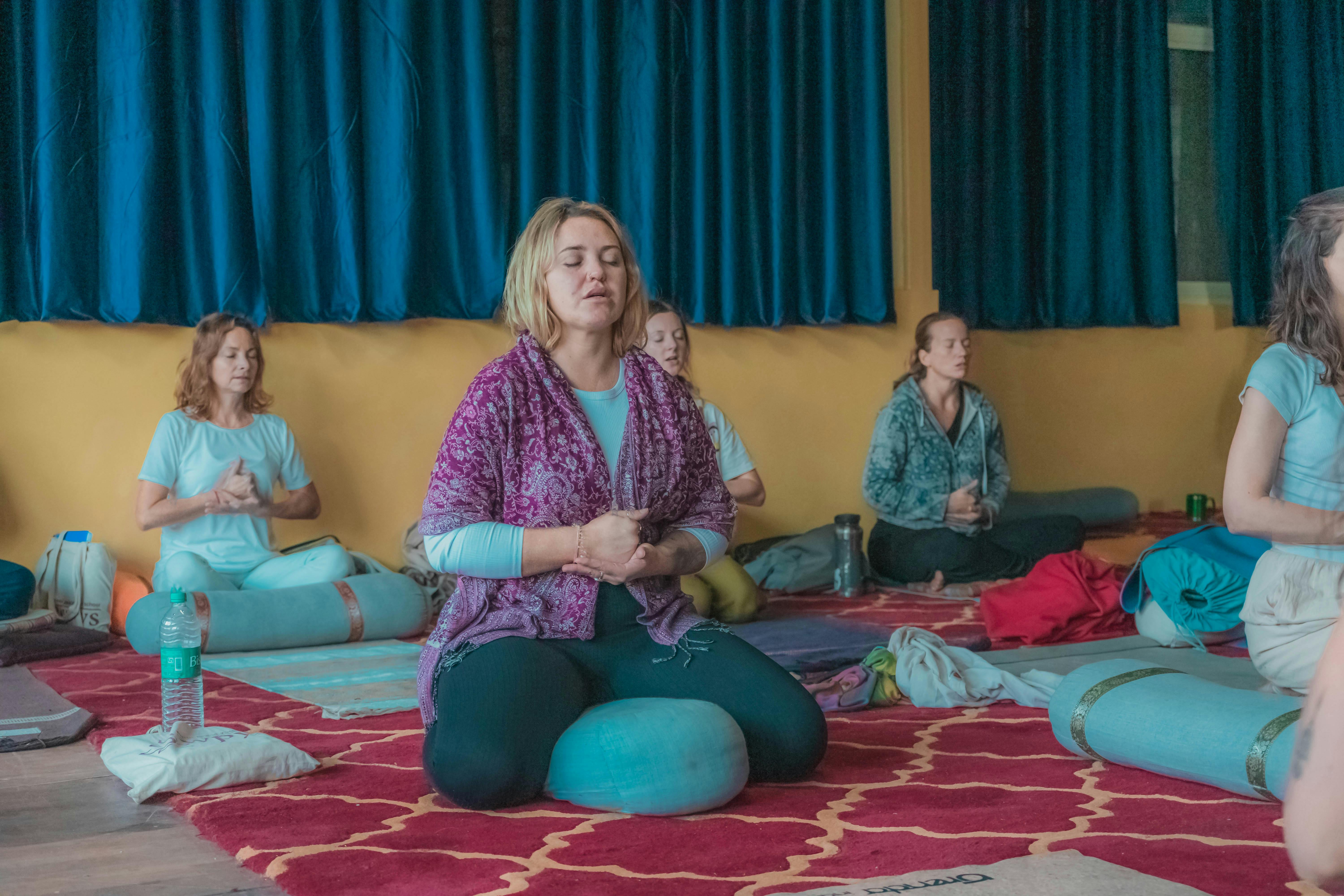
Discover how AI-powered personalized meditation and cutting-edge biofeedback devices are transforming mindfulness in 2026. Compare the best smart meditation apps, neurofeedback wearables, and immersive VR/AR experiences to reduce stress, improve sleep, and boost focus. Find your perfect wellness tech solution and invest in your mental clarity today!
Introduction to the Topic
In the relentless pace of 2026, the quest for inner peace and sustained focus has never been more critical. Traditional mindfulness practices, while timeless, often struggle to keep pace with our hyper-connected lives, leaving many feeling that generic meditation apps fall short. But what if meditation could be as personalized as your daily news feed, adapting to your unique physiological and psychological state in real-time? Welcome to the revolution of AI-powered personalized meditation and cutting-edge biofeedback devices – the game-changers transforming mental wellness in the modern era.
No longer is meditation a one-size-fits-all endeavor. The fusion of artificial intelligence and advanced biometric sensing technology is ushering in an era where your meditation practice is meticulously tailored, providing objective feedback and unprecedented effectiveness. This isn't just about guided meditations; it's about a dynamic, responsive journey towards deeper calm, sharper focus, and profound well-being. At findmeaningful.com, we've delved deep into the burgeoning market of smart meditation tools to bring you a comprehensive guide to the top solutions that promise to unlock your inner zen like never before. Get ready to explore how these innovative technologies can elevate your mental game, reduce stress, and enhance your overall quality of life.
Backgrounds & Facts
Meditation, an ancient practice rooted in spiritual traditions, has been scientifically validated for its profound benefits on stress reduction, emotional regulation, and cognitive function. For centuries, its accessibility was limited by the need for skilled teachers or dedicated personal practice. The early 21st century saw the rise of digital meditation apps like Calm and Headspace, democratizing access to guided mindfulness. However, by the mid-2020s, a crucial limitation became apparent: these apps, while helpful, largely offered generic content, failing to adapt to the individual's real-time needs, mood, or physiological responses. This led to user drop-off and a plateau in effectiveness for many.
Enter the transformative power of AI and biofeedback. By 2026, the wellness technology market is projected to exceed $7 trillion globally, with mental wellness tech being a significant growth driver. Artificial intelligence brings unprecedented personalization by analyzing user data – from meditation history and preferences to emotional responses detected through voice or even facial micro-expressions. AI algorithms can then dynamically select, create, or modify meditation content, pace, and even background soundscapes to optimize the user experience. Imagine an AI that learns your stress triggers and proactively suggests a calming breathwork session, or one that identifies your optimal brainwave state for deep focus and guides you there.
Biofeedback, on the other hand, provides the objective, real-time data needed to truly personalize and validate the meditation process. Devices ranging from advanced wearables to specialized headbands now monitor key physiological markers: Heart Rate Variability (HRV) for stress and vagal tone, Electroencephalography (EEG) for brainwave activity (alpha, theta, delta waves associated with relaxation and deep states), skin conductance for arousal levels, and even eye-tracking for focus. This data allows users to see, in real-time, how their body and mind respond to meditation. It transforms an often abstract practice into a measurable skill, providing immediate feedback on whether you are actually achieving a state of calm or focus. This synergy of AI's adaptive intelligence and biofeedback's objective measurement is not just enhancing meditation; it's redefining what's possible in mental wellness.
Expert Opinion / Analysis
“The integration of AI and biofeedback is the most significant leap in meditation technology we’ve seen in decades,” states Dr. Anya Sharma, lead neuroscientist and CEO of MindSync Labs, a leading research institution specializing in neuro-wellness. “For years, we've known the benefits of meditation, but the subjective nature of the practice made it challenging for many to sustain or even know if they were ‘doing it right.’ Now, AI acts as an infinitely patient, hyper-intelligent coach, and biofeedback provides the objective mirror, showing us precisely what’s happening internally.”
Dr. Sharma explains that AI’s strength lies in its ability to process vast amounts of data to create truly adaptive experiences. “Think of it as precision medicine for the mind. Instead of a generic prescription, AI analyzes your unique physiological and psychological profile – your sleep patterns, stress levels, even your daily mood entries – to curate a meditation program that evolves with you. If you’re struggling with focus one day, the AI might suggest a gamma wave entrainment session. If anxiety is high, it could guide you through heart coherence breathing, monitoring your HRV in real-time.”
The role of biofeedback, according to Dr. Sharma, is equally pivotal. “Neurofeedback, in particular, empowers individuals by giving them direct control over their brain states. Seeing your alpha waves increase on a screen as you relax, or your theta waves deepen during a creative visualization, provides a powerful reinforcement loop. It transforms a nebulous concept into a tangible skill, accelerating learning and mastery. This immediate, measurable feedback is crucial for motivation and long-term adherence.” She also highlights the potential for these tools to move beyond just stress reduction, extending into cognitive enhancement, emotional regulation, and even therapeutic applications for conditions like ADHD and chronic anxiety, often working in conjunction with licensed therapists.
While acknowledging the immense benefits, Dr. Sharma also cautions about the ethical considerations. “Data privacy is paramount. Users must be assured their biometric and personal data is secure and used only to enhance their wellness journey. Furthermore, these tools should augment, not replace, intrinsic practice and human connection. The goal is to empower self-mastery, not foster dependency on technology.” The industry is actively working on robust ethical AI frameworks and data governance to ensure user trust and well-being remain at the forefront of this exciting technological frontier.
💰 Best Options in Comparison (VERY IMPORTANT)
The market for AI-powered meditation and biofeedback devices is booming in 2026, offering a diverse array of tools to suit every need and budget. Here are some of the top contenders that are redefining mental wellness:
-
Zenith AI: The Personalized Meditation Ecosystem
Zenith AI is a premium subscription platform that leverages advanced AI to deliver hyper-personalized meditation experiences. It goes beyond simple algorithms, using emotional AI detection (via voice analysis and optional camera integration) to gauge your real-time mood and stress levels. Zenith AI then dynamically adjusts guided meditations, soundscapes, and breathwork exercises. It integrates seamlessly with smart home devices, allowing for ambient lighting and temperature adjustments to enhance your session. Ideal for those seeking a comprehensive, always-adapting digital meditation ecosystem with a focus on holistic well-being.
-
NeuroFlow Band: Real-Time Brainwave & HRV Training
The NeuroFlow Band is a sleek, comfortable wearable headband that offers real-time EEG (brainwave) and HRV (Heart Rate Variability) biofeedback. Paired with its intuitive app, it provides gamified neurofeedback training, allowing users to visually track their brainwave states (e.g., increasing alpha for relaxation, theta for creativity). It offers personalized challenges and progress reports, making meditation a measurable skill. Perfect for data-driven individuals, athletes, or executives who want objective proof of their progress and a direct hand in training their brain for peak performance and stress resilience.
-
AuraVerse VR: Immersive Reality for Deep States
AuraVerse VR transports you to hyper-realistic, often fantastical, virtual environments designed specifically for meditation and deep relaxation. Requiring a VR headset (compatible with leading models like Meta Quest 3, Apple Vision Pro), AuraVerse uses spatial audio, haptic feedback, and AI-driven narrative guides to create truly immersive journeys. It offers stress visualization exercises, nature escapes, and even abstract light shows designed to entrain specific brainwave states. Best for experiential learners, those who struggle with traditional meditation, or tech enthusiasts looking for a profound, distraction-free escape.
-
MindMentor Pro: The Holistic AI Wellness Coach
MindMentor Pro isn't just a meditation app; it's an AI-powered holistic wellness coach. It integrates with your existing health trackers (smartwatches, sleep monitors) to analyze daily habits, sleep quality, mood fluctuations, and even activity levels. Based on this comprehensive data, MindMentor Pro provides personalized meditation, breathwork, and lifestyle recommendations. It can predict potential stress points and offer proactive interventions. Ideal for individuals seeking an all-in-one preventative health solution that goes beyond meditation to optimize overall well-being.
Here’s a comparison of these leading options:
| Product/Service | Key Features | Personalization | Biofeedback | Price Model | Best For |
|---|---|---|---|---|---|
| Zenith AI | Emotional AI detection, adaptive meditations, smart home integration | Highest (real-time mood analysis) | Limited (via AI inference, not direct sensors) | Premium Subscription | Holistic digital ecosystem, emotional support |
| NeuroFlow Band | Real-time EEG & HRV feedback, gamified training | High (physiological response-driven) | Direct (EEG, HRV sensors) | Device Purchase + Optional Subscription | Data-driven users, neurofeedback training |
| AuraVerse VR | Immersive VR environments, haptic feedback, AI guides | Medium (adaptive narratives) | Indirect (via VR headset sensors, e.g., eye-tracking) | Content Purchase/Subscription (VR headset required) | Experiential learners, tech enthusiasts, distraction-free immersion |
| MindMentor Pro | Integrates with health trackers, holistic wellness recommendations | High (lifestyle & health data analysis) | Indirect (via integrated devices like smartwatches) | Subscription (often bundled) | All-in-one wellness, preventative health, data-integrated lifestyle |
Outlook & Trends
Looking ahead to the late 2020s and beyond, the evolution of AI and biofeedback in meditation promises even more sophisticated and integrated experiences. We can anticipate further miniaturization of biofeedback sensors, perhaps embedded invisibly into everyday objects like smart pillows that monitor sleep brainwaves, or even smart fabrics that track HRV throughout the day, offering subtle, real-time nudges for mindfulness. The line between meditation tech and general health monitoring will blur, with personalized meditation prescriptions becoming an integral part of preventative healthcare plans, potentially even prescribed by doctors as digital therapeutics.
AI will become hyper-predictive, anticipating stress triggers or mood shifts before they fully manifest, offering proactive interventions rather than reactive responses. Imagine an AI that learns your unique circadian rhythm, work patterns, and even genetic predispositions to suggest the optimal meditation type and duration at the perfect moment. Furthermore, the convergence of these technologies with advanced haptics and multimodal sensory feedback will create truly synesthetic meditation experiences, engaging all senses in a harmonious pursuit of inner calm. The ethical considerations around data privacy and algorithmic bias will also continue to evolve, with increasing emphasis on transparency, user control, and responsible AI development to ensure these powerful tools genuinely serve humanity’s well-being. The future of focus is one where technology acts as a wise, personalized guide, empowering us to cultivate profound states of mind with unprecedented ease and effectiveness.
Conclusion
The year 2026 marks a pivotal moment in the journey of mental wellness, where the ancient wisdom of meditation meets the cutting-edge innovation of artificial intelligence and biofeedback. We've moved far beyond generic apps to a landscape of personalized, data-driven experiences that promise to revolutionize how we manage stress, enhance focus, and cultivate inner peace. From AI-powered platforms that adapt to your emotional state to sophisticated wearables that provide real-time brainwave feedback, the tools available today offer unprecedented opportunities for self-mastery.
Investing in these smart meditation solutions isn't just about buying a gadget; it's about investing in your most valuable asset: your mental well-being. By embracing these technologies, you gain access to a tailored path to deeper calm, measurable progress, and a more resilient mind. Whether you're seeking to reduce anxiety, improve sleep, boost cognitive performance, or simply find more moments of tranquility in a chaotic world, there's an AI meditation tool or biofeedback device designed to help you achieve your goals. Explore the options, compare the features, and take the leap towards a future where your focus is sharper, your calm is deeper, and your life is more meaningful. Your personalized path to inner zen starts now.