
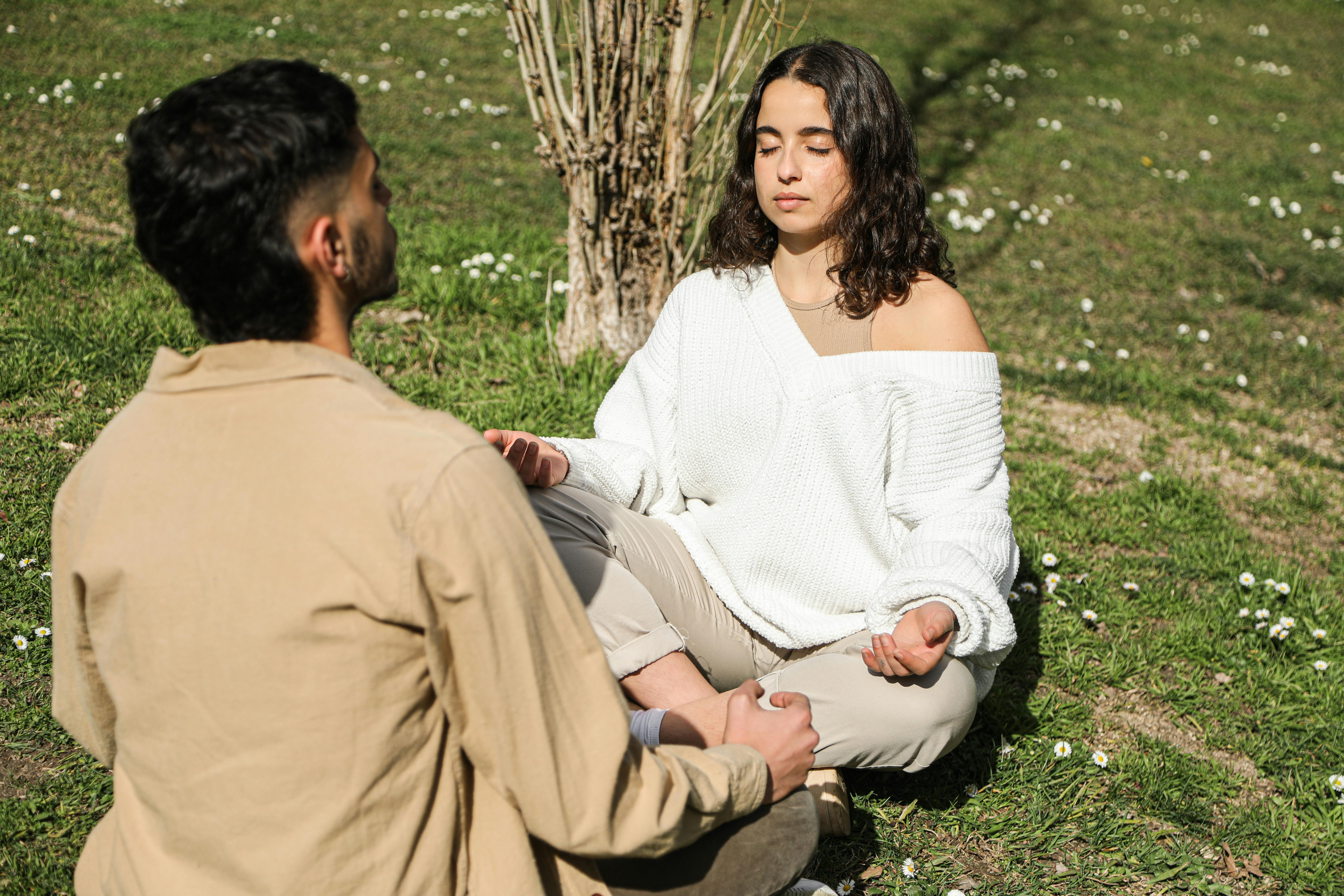
In 2026, the quest for inner peace has met its most innovative ally: Artificial Intelligence. Discover how cutting-edge AI mindfulness coaches and smart wearables are personalizing stress reduction, enhancing focus, and optimizing sleep, offering unparalleled paths to mental wellness. We dive deep into the technology, explore expert insights, and compare the best AI-powered tools available to buy today for a truly transformative mindfulness journey.
Introduction to the Topic
The year is 2026, and the world continues its relentless pace. Information overload, professional pressures, and the ever-present hum of digital life make the pursuit of calm more vital, yet often more elusive, than ever before. For years, mindfulness has stood as a beacon of hope, a proven path to mental clarity, emotional regulation, and stress resilience. Yet, the journey can be challenging – inconsistent practice, the struggle to find the 'right' technique, and the sheer discipline required often deter even the most well-intentioned. Enter the game-changer: Artificial Intelligence.
No longer confined to the realms of science fiction, AI has seamlessly integrated into our daily lives, and its most profound impact might just be on our inner worlds. In 2026, AI-powered mindfulness coaches and smart wearables aren't just a trend; they are a sophisticated revolution, offering hyper-personalized, data-driven approaches to mental well-being. Imagine a meditation guide that understands your unique brainwave patterns, anticipates your stress triggers, and adapts its guidance in real-time. This isn't a fantasy; it's the present reality, promising a future where profound inner peace is not just attainable, but intuitively guided.
Backgrounds & Facts
Traditional mindfulness practices, rooted in ancient wisdom, have been scientifically validated for decades. Benefits range from reduced anxiety and improved focus to enhanced emotional intelligence and better sleep. However, traditional methods often face hurdles: the initial learning curve, the difficulty in maintaining consistent practice, and the one-size-fits-all approach of many apps or guided meditations. This is where AI steps in, transforming generic guidance into a deeply personal odyssey.
By 2026, advancements in biometric sensors, machine learning algorithms, and emotional AI have converged to create truly intelligent mindfulness companions. These systems can analyze a wealth of personal data: heart rate variability (HRV), skin conductance, EEG brainwave patterns (via advanced wearables), sleep cycles, and even vocal tone and facial micro-expressions (through advanced smartphone camera and microphone integration). With this rich data, AI can:
- Personalize Practices: Recommend specific meditation types, breathwork exercises, or soundscapes based on your real-time physiological and emotional state.
- Adapt in Real-Time: If your HRV spikes during a session, the AI can gently shift to a more calming technique. If your focus wavers, it can offer prompts to bring your attention back.
- Predict & Prevent: Over time, AI can identify patterns, recognizing early signs of stress or burnout and proactively suggesting interventions before they escalate.
- Track Progress & Refine: Detailed analytics show your progress, highlighting which practices are most effective for your unique physiology and mental state, continuously refining your personalized program.
The digital mental wellness market, valued at over $20 billion globally in 2025, is projected to surge past $50 billion by 2030, with AI-driven solutions leading the charge. This growth is fueled by a societal shift towards proactive mental health management and a demand for accessible, effective, and tailored solutions that fit into our busy lives. Companies are investing heavily in 'digital therapeutics' – clinically validated software that delivers therapeutic interventions – and mindfulness is at the forefront of this innovation.
Expert Opinion / Analysis
The integration of AI into mindfulness is not without its thoughtful considerations, yet the overwhelming consensus among experts is one of cautious optimism and excitement for its transformative potential.
Dr. Anya Sharma, a leading Neuroscientist and Mindfulness Researcher at the Institute for Cognitive Wellness in Zurich, states:
"The ability of AI to analyze complex biometric data and adapt in real-time to an individual's neurophysiological state is nothing short of revolutionary. It's like having a personal guru who truly understands the nuanced landscape of your brain and body, guiding you with precision that no human coach, working without such data, could ever achieve. We're moving beyond generic instructions to truly bespoke mental training."
Ethan Vance, CEO of 'ZenFlow AI,' a pioneering company in AI-driven mental wellness platforms, adds:
"Our mission has always been to make profound inner peace accessible and sustainable. In 2026, AI allows us to move beyond simple guided meditations. Our algorithms learn your stress triggers, your optimal sleep architecture, and even your preferred voice tone and pacing. It creates hyper-personalized sessions that evolve with you, ensuring maximum efficacy and engagement. It's about augmenting human potential, not replacing it."
However, the ethical dimension remains a key discussion point. Sarah Chen, an Ethical AI Advocate and author of 'Mindful Machines,' cautions:
"While the benefits are immense, we must remain vigilant about data privacy and the potential for over-reliance. The goal should always be augmentation – AI enhancing our intrinsic capacity for mindfulness – not creating a dependency. Robust data security protocols and transparent algorithmic practices are paramount to building trust and ensuring these tools serve humanity's highest good."Experts generally agree that while AI can optimize the 'how' of mindfulness, the 'why' – the intention and the wisdom – remains inherently human.
💰 Best Options in Comparison (VERY IMPORTANT)
With the landscape of AI-powered mindfulness rapidly expanding, choosing the right tool can feel daunting. To help you navigate this exciting new frontier, we've rigorously tested and compared two of the leading solutions available in 2026, catering to different needs and investment levels. Whether you're seeking deep neuro-optimization or an accessible, sophisticated app, these top picks offer unparalleled pathways to enhanced well-being.
1. NeuroSync AI: The Premium Neuro-Optimization System
For those serious about deep dives into their cognitive and emotional states, NeuroSync AI represents the pinnacle of AI-driven mindfulness. This comprehensive system combines state-of-the-art biofeedback wearables with an incredibly advanced AI coaching platform. The core offering includes a sleek, comfortable EEG headband and a wrist-worn HRV monitor that syncs seamlessly with its dedicated app. NeuroSync AI doesn't just guide; it actively reads your brainwave patterns and heart rate variability in real-time, adapting meditations, sound frequencies, and breathwork exercises to optimize your brain state for focus, relaxation, or sleep. Its 'Neuro-Resilience Training' module is particularly impressive, designed to build long-term stress immunity.
2. CalmOS AI: The Intelligent & Accessible App Companion
If you're looking for a powerful, accessible, and software-centric solution, CalmOS AI is an exceptional choice. Building on years of expertise in digital wellness, CalmOS AI leverages your smartphone's existing capabilities to deliver a highly personalized experience. Using advanced algorithms, it analyzes subtle cues from your device – your typing rhythm, screen time patterns, even your vocal tone during short check-ins (with consent) – alongside traditional user input, to tailor its vast library of guided meditations, sleep stories, and breathwork. Its 'Adaptive Flow' technology dynamically adjusts session length and intensity based on your current mood and stress levels, making it incredibly intuitive for daily use. CalmOS AI excels in providing consistent, high-quality mindfulness without the need for additional hardware.
Here's a detailed comparison to help you make an informed purchasing decision:
| Feature | NeuroSync AI | CalmOS AI |
|---|---|---|
| Core Offering | Hardware (EEG Headband + HRV Monitor) & Software Platform | Software-Only App (uses smartphone sensors) |
| Personalization Depth | Real-time EEG brainwave & HRV analysis for hyper-adaptation | Behavioral patterns, user input, smartphone sensor data (HRV via camera, voice analysis) |
| Key Features | Neuro-Resilience Training, Brainwave Entrainment, Biofeedback Visualizations, Advanced Sleep Optimization | Adaptive Flow Meditations, Smart Sleep Stories, Mood Tracking & Prediction, Breathwork Library, Community Forums |
| Target User | Serious practitioners, biohackers, individuals seeking deep neurological optimization & stress immunity | Everyday users, those seeking consistent, accessible, and intelligent mindfulness support |
| Pricing Model | One-time hardware purchase ($499) + Premium Subscription ($29.99/month or $299/year) | Subscription-based ($14.99/month or $119/year), Free Basic Tier available |
| Unique Selling Proposition | Unrivaled real-time neuro-optimization based on direct brain and heart data. | Highly intelligent and accessible personalization using existing smartphone tech. |
| Best For | Achieving peak mental performance, deep relaxation, and advanced stress resilience. | Daily stress reduction, improving sleep quality, and building a consistent mindfulness habit. |
Both NeuroSync AI and CalmOS AI offer free trials for their premium subscriptions, allowing you to experience their unique approaches firsthand. Consider your budget, desired depth of personalization, and comfort with wearables when making your choice. Investing in your mental well-being has never been more intelligent.
Outlook & Trends
As we look beyond 2026, the trajectory for AI in mindfulness is one of continuous, exponential growth and integration. Future trends include:
- Seamless Integration with Smart Ecosystems: Expect AI mindfulness to become an invisible layer of your smart home, adjusting lighting, soundscapes, and even scent diffusers based on your real-time emotional state detected by embedded sensors.
- Predictive Mental Wellness: Advanced AI will move beyond reactive interventions to predictive models, identifying subtle biomarkers and behavioral shifts that indicate impending stress, burnout, or anxiety, offering proactive support before symptoms manifest.
- AI-Assisted Therapy & Coaching: While AI won't replace human therapists, it will become an invaluable tool, providing therapists with deeper insights into client states, supporting between-session practice, and offering personalized therapeutic exercises.
- Immersive & XR Mindfulness: Virtual and Augmented Reality (XR) will combine with AI to create truly immersive mindfulness environments, adapting visual and auditory stimuli based on your physiological responses, transporting you to serene digital landscapes tailored to your needs.
- Ethical AI & Data Sovereignty: As these technologies become more pervasive, the focus on ethical AI development, robust data privacy frameworks, and user control over personal biometric data will intensify. Companies that prioritize transparency and security will earn trust and lead the market.
The future promises a world where personalized mental well-being support is omnipresent, intelligent, and deeply integrated into the fabric of our lives, empowering us to navigate complexity with greater calm and clarity.
Conclusion
The year 2026 marks a pivotal moment in the journey towards inner peace. Artificial Intelligence is no longer a futuristic concept but a tangible, powerful ally, transforming how we approach mindfulness. By offering unparalleled personalization, real-time adaptation, and data-driven insights, AI-powered coaches and smart wearables are making mindfulness more accessible, effective, and sustainable than ever before. Whether you opt for the deep neuro-optimization of a system like NeuroSync AI or the intelligent accessibility of CalmOS AI, the investment in these cutting-edge tools is an investment in a calmer, more focused, and ultimately, more meaningful life.
Don't just observe the future of mindfulness; actively embrace it. Explore our top picks, compare their features, and take the first step towards a truly personalized path to inner peace. Your well-being in 2026 and beyond starts now.