
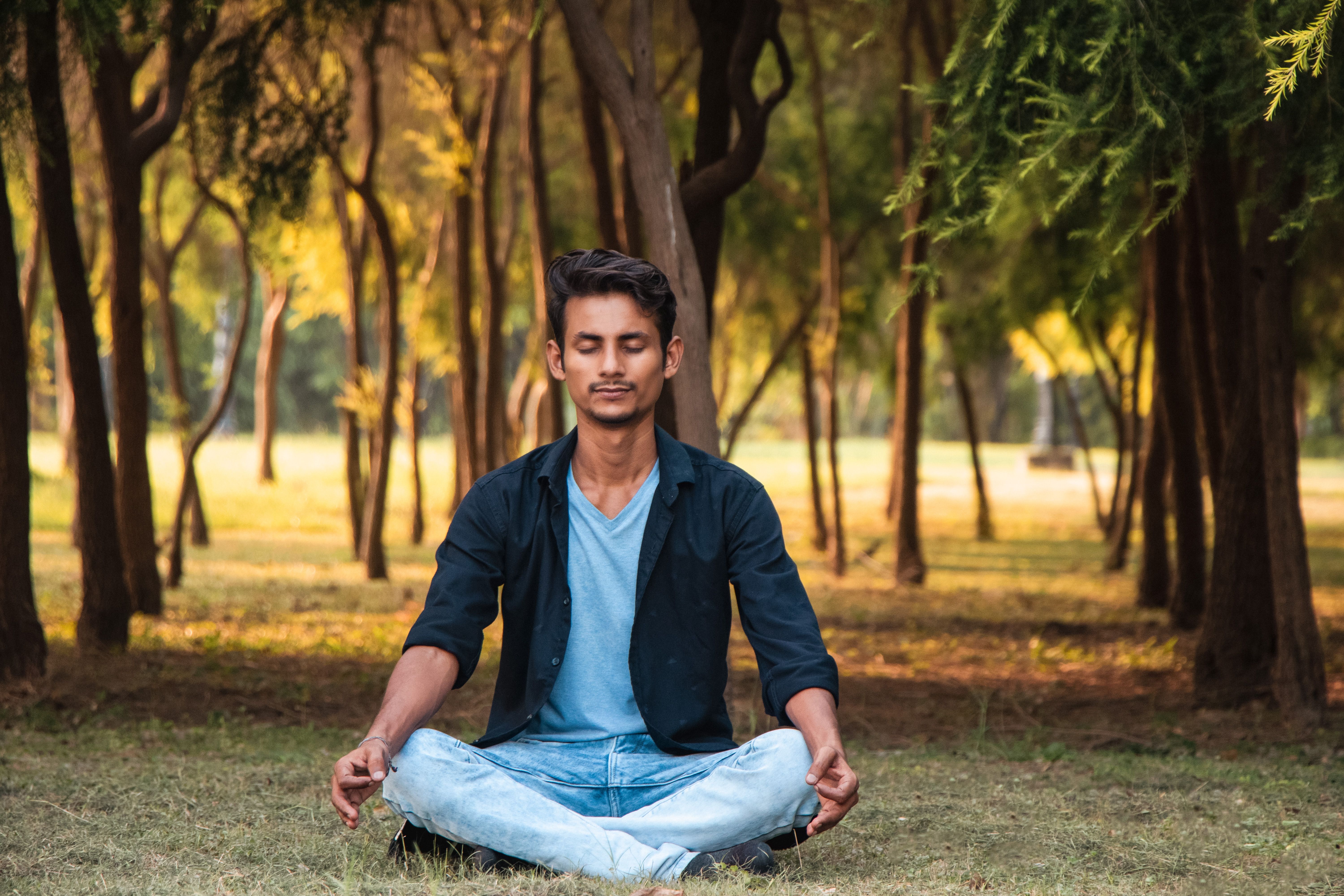
Mindfulness and relaxation are routinely offered as the same thing, and people who find one unhelpful often assume the other will be too. They target different things and succeed by different criteria.
The two have different targets
Relaxation techniques aim at a state: lowered arousal, reduced muscle tension, slower breathing. The state is the outcome, and the method is judged by whether it arrives.
Attention training aims at a capacity — being able to notice where attention is and to move it deliberately — which is a skill rather than a state.
A session of attention practice can therefore be entirely successful while leaving the practitioner no calmer than when they started.
Relaxation works directly on physiology
Slow breathing with an extended exhale, progressive muscular release and similar methods act on measurable physiological variables through fairly direct routes.
Their effects are relatively quick and reasonably reliable, which is why they appear in clinical settings where reducing acute arousal is the immediate goal.
Because the target is a state, they are also self-verifying: the person can tell whether it worked without needing any interpretation.
Attention training changes the relationship to experience
What practitioners report is not that difficult states stop occurring but that they are recognised earlier and are less automatically acted upon.
This includes remaining with discomfort rather than escaping it, which is close to the opposite of what a relaxation technique is trying to achieve.
Programmes for persistent pain rely on this distinction explicitly, since the sensation is not going to be removed and the relationship to it is what remains available.
Confusing them produces predictable disappointment
Someone who takes up attention practice expecting reliable calm will judge it against a criterion it does not target and will usually conclude it does not work.
Calm frequently does arrive as a by-product, which reinforces the misunderstanding until a session where it does not, at which point the practice appears to have failed.
The instruction most teachers give — that pleasant states are not the point and are not to be pursued — exists to head off exactly this.
Relaxation is not reliably relaxing for everyone
A proportion of people experience increased anxiety when deliberately relaxing, particularly those accustomed to maintaining vigilance or managing intrusive material.
Reduced external focus can allow internal content to surface, which makes the technique feel like it is producing the problem it was meant to relieve.
Practices with an external anchor, or with the eyes open and the body moving, often suit those situations better, and persistent distress in either practice is worth raising with a professional.