
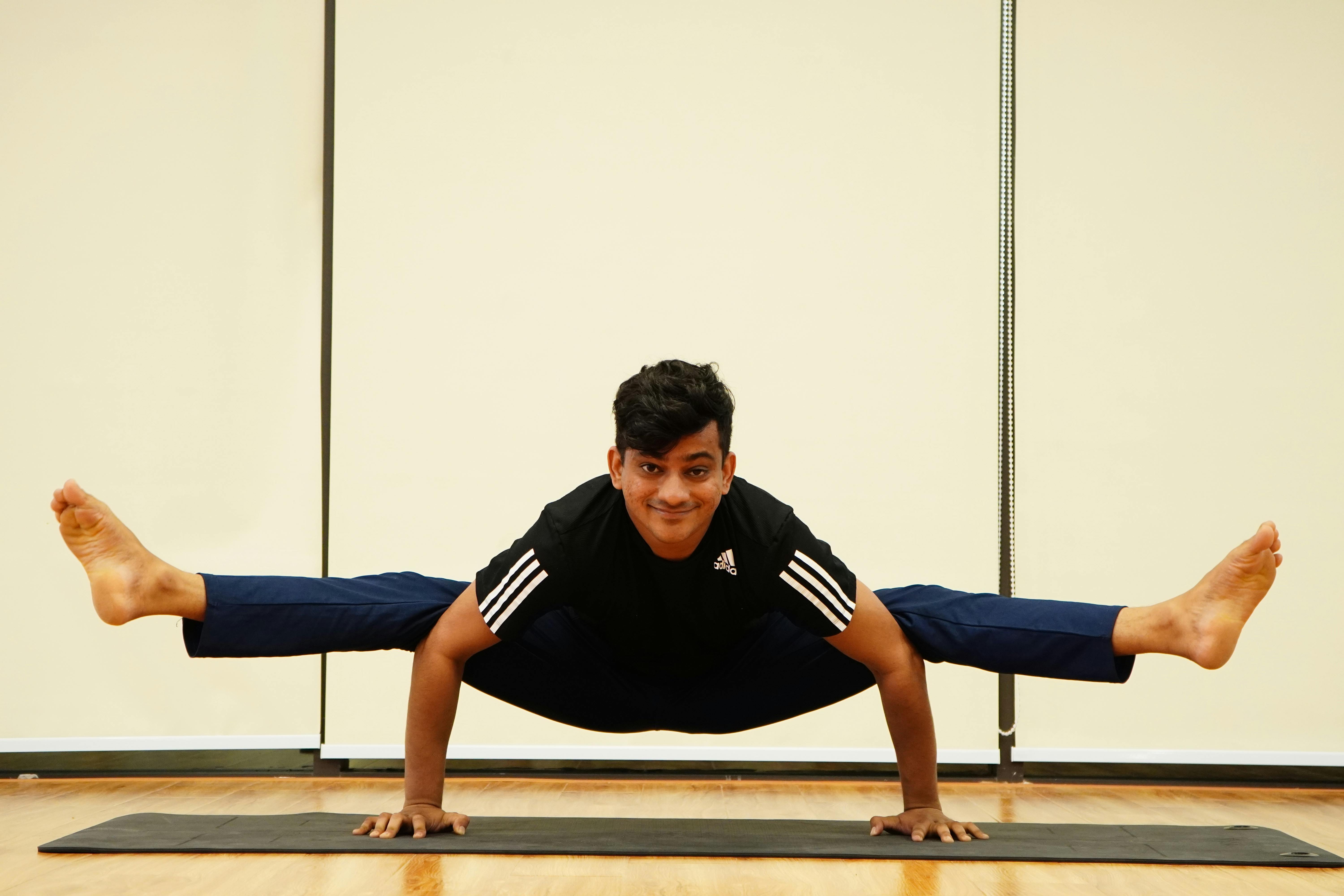
Range of movement improves reliably with practice, and the usual explanation is that the muscles have lengthened. The evidence points substantially elsewhere, and the actual mechanism changes how flexibility work should be understood.
The limit is often protective rather than structural
Movement into an unfamiliar range triggers protective activity from the nervous system, which increases resistance well before any tissue reaches its mechanical limit.
The end point most people meet is therefore a regulated stopping point rather than the edge of what the tissue could physically accommodate.
This is consistent with the observation that range varies with temperature, time of day, fatigue and stress, none of which alter tissue length.
Studies point towards changed tolerance
Work measuring both range and the resistance encountered has generally found range increasing after training while measured stiffness changes much less.
What changes more consistently is the point at which the stretch becomes intolerable, which suggests an adjustment in what the system permits rather than in the material.
Some structural adaptation does occur with sustained loaded work over long periods, but it accounts for less of the short-term gain than intuition suggests.
Passive range and usable range differ
Being placed into a position with external assistance demonstrates passive range, which is not the same as being able to reach and control that position actively.
Range without strength through it is not reliably available during movement and offers little protection at the end of the range.
This is why approaches that load the muscle in a lengthened position tend to produce more usable improvement than passive holding alone.
More range is not automatically better
Joint stability depends on the surrounding structures restraining movement, and people with naturally large range often need strength and control more than additional range.
Working towards extreme positions without the strength to control them shifts load onto passive structures that adapt slowly and heal poorly.
Hypermobility is a recognised condition with implications for how practice should be approached, and it is worth identifying with a professional rather than treating as a talent.
What the gains are actually for
Flexibility supports moving through the ranges an activity requires without compensating elsewhere, which is a specific and modest claim.
Claims that stretching prevents injury or removes soreness have proved considerably weaker in testing than their prominence in practice would suggest.
Persistent restriction in one joint, particularly with pain or a hard end point, is a clinical question rather than a training one and should be assessed rather than stretched into.