
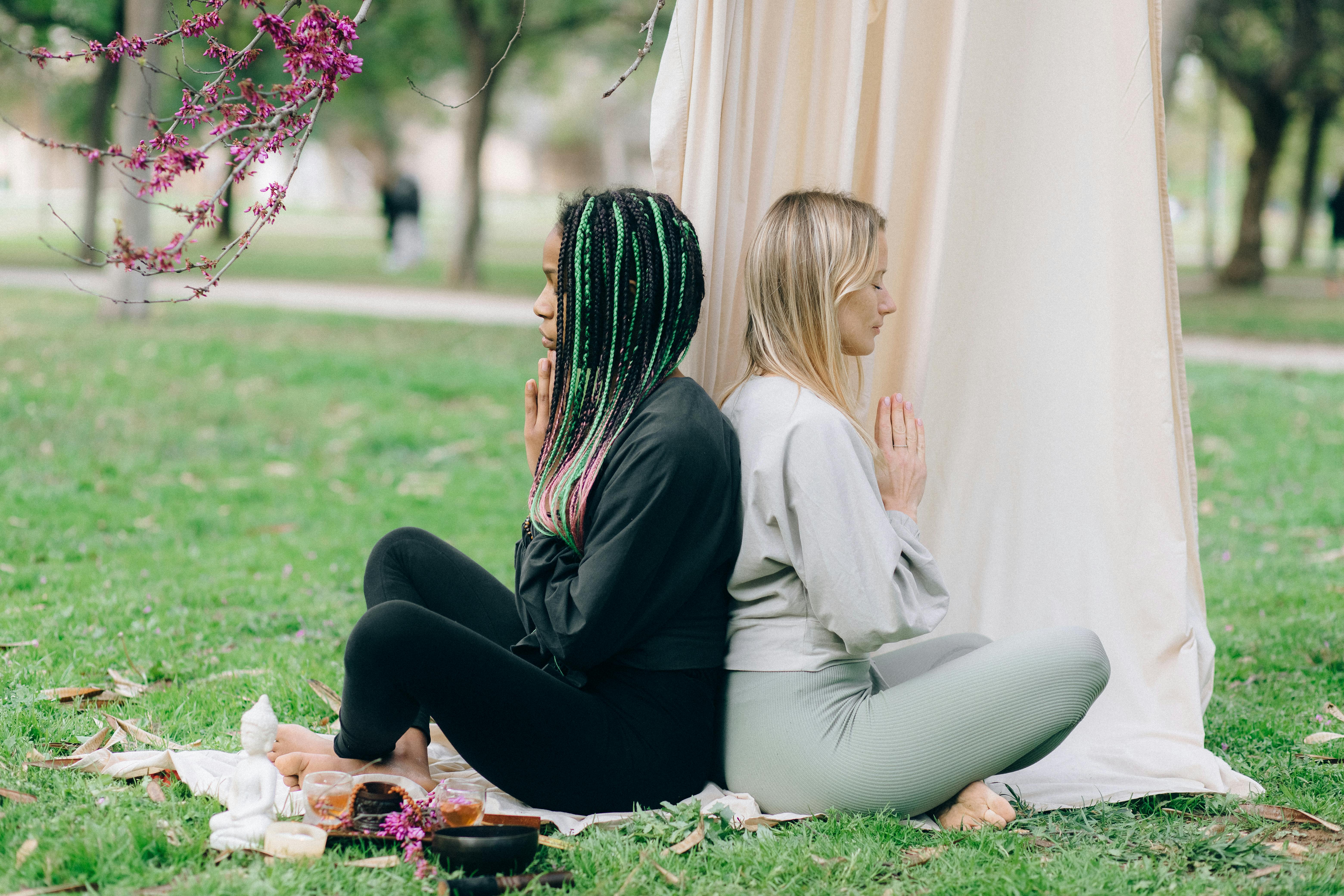
Beginners are often surprised by how much instruction concerns physical arrangement. The emphasis is practical, and it addresses the failure modes that end sessions early.
Posture regulates alertness
An upright spine supports wakefulness, while a slumped position drifts toward drowsiness, particularly in a quiet room with eyes closed.
Meditation sits between ordinary alertness and sleep, and the physical arrangement is one of the few levers available for staying on the right side of that boundary.
This is why traditions that value alertness are specific about the back and less concerned with the legs, which vary widely across cultures and body types.
The chest position affects breathing
A collapsed chest restricts how freely the diaphragm can move, so breath becomes shallower and more effortful without the sitter noticing.
Since breath is the object of attention in many practices, an arrangement that makes it uncomfortable interferes with the practice itself.
Opening the front of the body slightly, without holding it rigidly, usually resolves this at very little cost in effort.
Pain is the most common reason sessions end
Sitting still for even a modest period puts sustained load on the hips, knees and lower back, and discomfort accumulates in whichever spot is least supported.
Cushions, benches and chairs all exist to change where that load falls, and the choice is individual rather than a matter of correctness.
Cross-legged floor sitting is culturally traditional rather than technically required, and insisting on it can end a practice that a chair would have sustained.
Stillness is instructive rather than virtuous
Holding a position without adjusting reveals the impulse to move, and observing that impulse is itself part of what is being trained.
The instruction is not to endure injury, and traditions distinguish between ordinary discomfort and pain that signals harm.
Moving deliberately, with attention, differs from shifting automatically, and the deliberate version is compatible with the practice.
Adapting rather than enduring
Anyone with joint problems, back injury or limited mobility should adapt the position rather than persist through pain, and a teacher can suggest arrangements.
Lying down is available for people who cannot sit, with the understanding that drowsiness becomes more likely and shorter sessions may work better.
Persistent pain during or after sitting is a matter for a clinician rather than something to be meditated through.